
RUOMEI / BUYER’S GUIDE
Custom-Shaped vs. Rectangular Light Boxes: Which Fits Your Logo?
Start with the message the sign must carry. A shaped outline can follow a distinctive logo; a rectangular face can keep a logo and supporting text together. Compare both at the size and location you actually need.
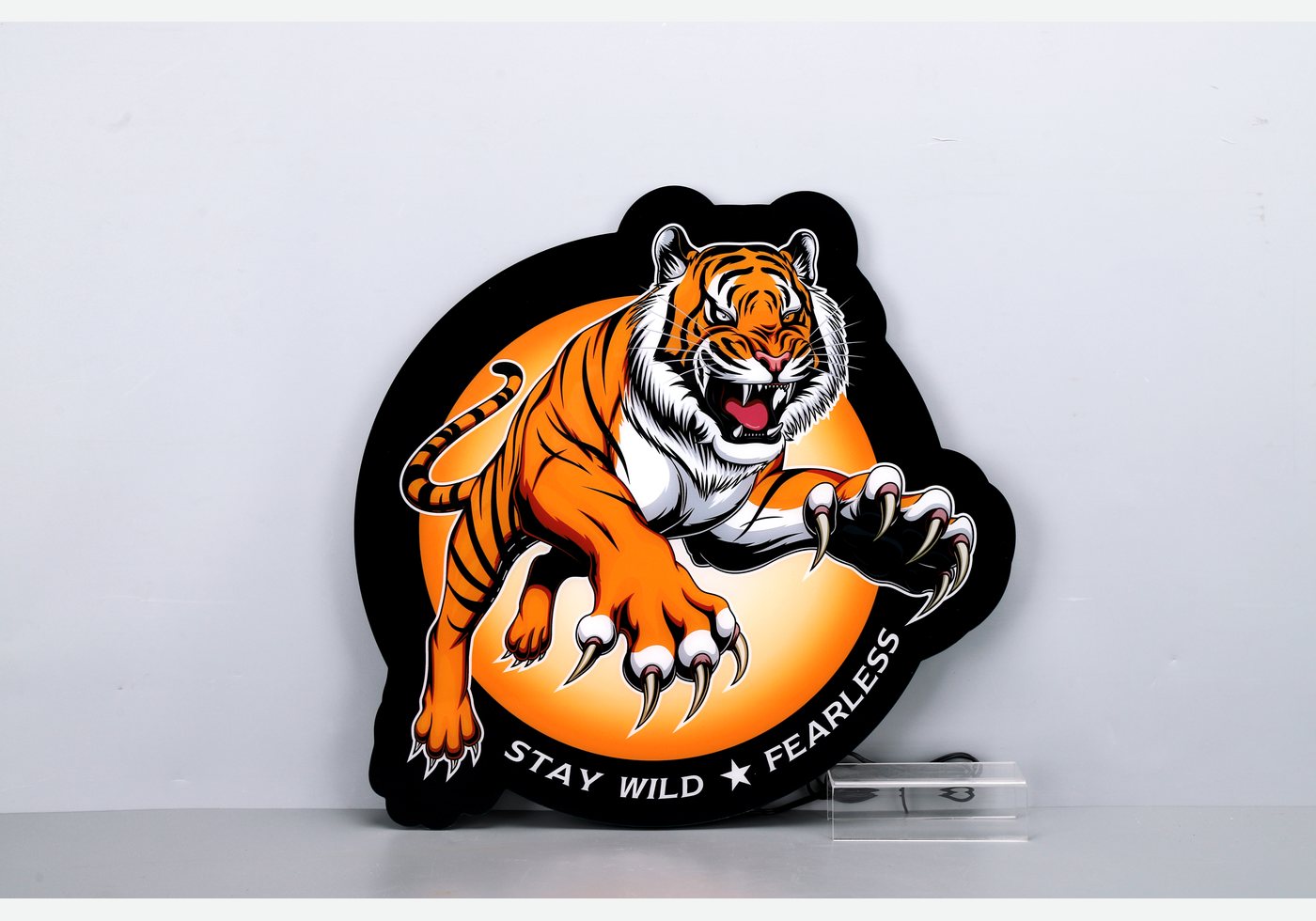
A shaped-outline product example. The photograph shows the outline, not a universal construction or outdoor rating.
1. Decide what must stay in the artwork
Before choosing a cabinet shape, separate the essential logo from the rest of the message. Does the sign need a tagline, a product description or several lines of text? Mark anything that cannot be removed or rearranged.
A custom outline is worth reviewing when the silhouette itself matters. A rectangular layout is worth reviewing when the sign needs a defined background and space for supporting information. Neither format fixes lettering that is too small to read at the intended distance.
Ask to see the complete composition at the proposed finished size. A close-up on a laptop can make small text look more usable than it will be across a room.
2. Compare the same requirements
| Decision | Custom-shaped outline | Rectangular face |
|---|---|---|
| Logo layout | Review which parts define the outer contour. | Review margins around the logo and other text. |
| Available space | Check the furthest points of an irregular outline. | Check the full rectangle against the available opening. |
| Changing the graphic | Ask whether a future graphic can use the agreed shape and construction. | Ask how the face or graphic is accessed; rectangular does not automatically mean replaceable. |
| Quotation | Provide the complete contour, size and quantity. | Provide overall size, full artwork and quantity. |
These are review questions, not fixed performance differences. Shape alone does not establish brightness, price, weight or outdoor suitability. Those depend on the complete specification.
3. “Same width” is not the same comparison
If one proposal uses the logo width and another uses the complete sign width, the numbers cannot be compared directly. Label what is being measured.
For an irregular outline, send the maximum available width and height. Keep the logo proportions unless a revised layout has been approved. If two alternatives must fit the same fixture, compare both inside that fixture rather than stretching one design to match a single number.
4. Show where the sign will go
Send a photo of the intended location, plus a note on whether the sign will hang, mount to a wall or stand on a counter. Include any restriction on the cable exit or the position of the power supply.
A product photograph usually cannot show the fixing points, rear access or all electrical components. Ask for those details to be included in the proposed configuration. For a counter display, confirm the available footprint as well as the front view.
For an outdoor project, state the exposure and installation conditions before choosing a construction. A shaped face or a metal-looking frame is not evidence of an outdoor rating.
5. Ask for two clearly defined options
If you are undecided, ask for both formats against one brief. Keep the intended use, quantities, lighting requirements, mounting arrangement and delivery scope consistent. Have the supplier identify any differences that remain.
Do not assume that a simpler outline guarantees a lower total cost. Nor should a distinctive contour be treated as a separate quality grade. Request the proposed construction and what is included with each option.
At RUOMEI, a graphic or reference image, size and quantity are enough to start a light box quotation. Installation and destination details help confirm the final configuration. If quantities are still uncertain, send an estimated range.
6. Send a brief that allows a useful comparison
- The logo and any text that must remain in the design.
- The maximum available width and height, with units.
- The quantity for each size or artwork version.
- A location photo and preferred mounting method, if known.
- Any need to change the graphic later.
Browse our custom LED light box options for product examples. If the outline is the part you are unsure about, say so in your inquiry. We can review the direction against the artwork and the space available before the final drawings and configuration are approved.
FROM YOUR BRIEF TO THE NEXT STEP
Send us what you have so far.
A logo or reference photo, size and quantity will get us started. Include any questions about the design or installation.
Tell us about your project
Use the message field to describe your artwork and requirements.