
RUOMEI / BUYER’S GUIDE
LED Sign Inspection: Does Every Unit Receive a 72-Hour Aging Test?
Every unit receives basic checks, but that does not mean every unit in a large order receives the same detailed inspection and 72-hour aging test. At RUOMEI, the detailed sample size depends on the inspection batch. Confirm the batch, checks and records before production.
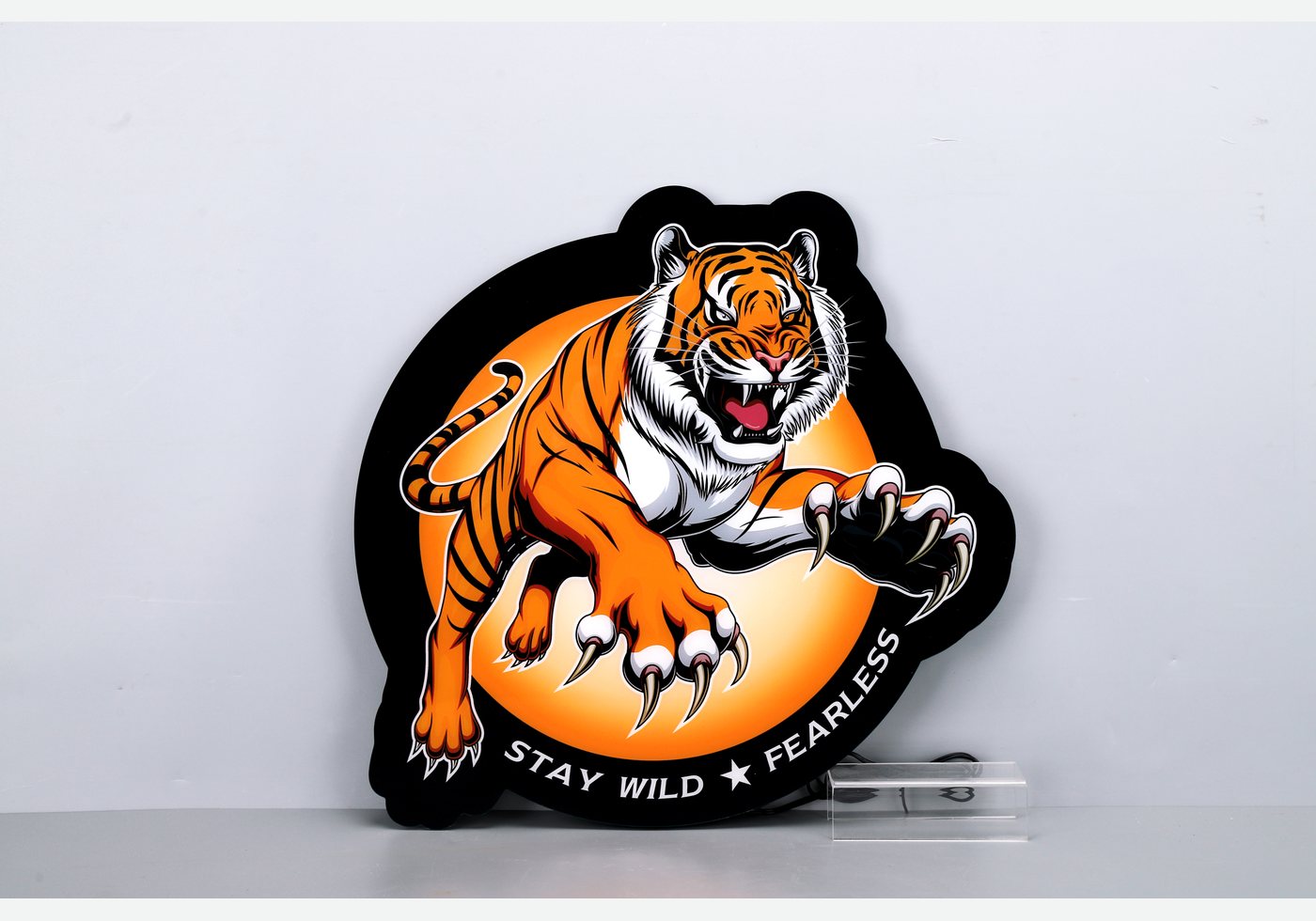
An illuminated finished product shows appearance at the time of the photo. It does not establish how many units were checked or how long they were aged; those need inspection records.
1. Separate the basic checks from detailed inspection
Each unit is checked for obvious appearance problems, configuration labels, power-on and its main functions. These checks apply to every unit, including units outside the detailed inspection sample.
Detailed dimensions, actual power, voltage/current stability and 72-hour aging follow the agreed sampling rule. A statement such as “100% checked” needs that explanation. Ask which checks cover every unit, which are sampled, and which batch the results describe.
2. Calculate the sample from the inspection batch
RUOMEI’s confirmed baseline is full detailed inspection for samples and batches of up to 30 units, 30% for 31–150 units, and 15% for more than 150 units. Round a fractional sample count up to the next whole unit. Selected products receive the 72-hour aging test.
| Example: one inspection batch | Basic checks | Detailed inspection + 72-hour aging |
|---|---|---|
| 20 identical units | 20 units | 20 units (all) |
| 41 identical units | 41 units | 13 units (41 × 30% = 12.3, rounded up) |
| 200 identical units | 200 units | 30 units (200 × 15%) |
These are calculation examples, not records of completed orders. The percentages describe RUOMEI’s baseline plan; they are not a claim of certification or an AQL sampling standard.
3. Keep different designs and configurations separate
Different artwork, sizes or electrical configurations form separate inspection batches. You cannot use one design’s results to represent another design simply because both belong to the same purchase order.
For example, an order containing 100 units of design A and 100 of design B has two 100-unit batches. Under the baseline rule, each batch has 30 units selected for detailed inspection and aging: 60 selected units in total, while all 200 units receive the basic checks. Treating them as one 200-unit batch would incorrectly reduce the detailed sample to 30.
Before production, give each version a clear product reference and quantity. Confirm the inspection grouping if the electrical configuration changes within a design.
4. Ask for records that identify the checked units
A rack photograph or a short lighting video can show that products were powered on. It cannot, on its own, show a complete 72-hour test or establish which units belong to your order. Request records that connect the inspection to the order, design/configuration, batch quantity and selected units.
Agree what you need to review: measured dimensions, electrical results, aging start and finish information, photographs and any non-conformities. This is a project checklist to agree before production, rather than a promise that every order includes a particular report format.
5. Confirm what happens when a check fails
Under RUOMEI’s confirmed inspection rule, a critical functional problem triggers checks of the affected whole batch. After correction, the original failed item and related functions are checked again. A corrected product that failed aging receives a new, complete 72-hour aging test.
Request the correction and recheck result against the same product reference. An initial failure and a corrected result should not become two unrelated photographs with no explanation of what changed.
6. Put additional inspection needs into the brief
If your customer requires a different sampling plan, a particular test or third-party inspection, send the written requirement before approving the order. We can review the scope, feasibility, cost and schedule rather than assuming the baseline satisfies it. An aging check also does not replace confirmation of destination-market document requirements.
Start with artwork, size and quantity through our custom LED light box page or the form below. Include the quantity of each version and the inspection records your customer needs. That gives us a practical basis for agreeing the order’s inspection plan.
FROM YOUR BRIEF TO THE NEXT STEP
Send us what you have so far.
A logo or reference photo, size and quantity will get us started. Include any questions about the design or installation.
Tell us about your project
Use the message field to describe your artwork and requirements.